
What Cheetos, Geiko and Lindt Understand That Most Brands Don’t
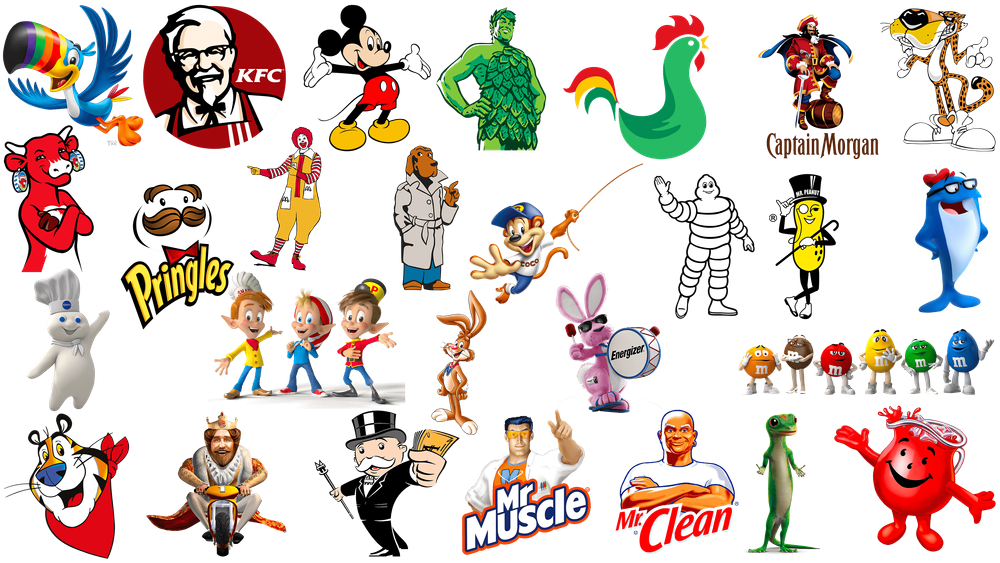
Last week, in a meeting about brand strategy, someone asked me whether building a brand character still made sense in 2026.
It took everything in me not to answer, “How are we still debating this?”
Some of the world's strongest brands solved this decades ago. A character can personify an abstract idea, create instant distinctiveness, and make your advertising dramatically easier to build and recognise.
And yet, precisely 74.5734% of brands still try to communicate through abstract positioning statements and rational benefit claims. And that is B2C. Let’s not even go down the B2B slope.
Whenever I am invited to join this debate, I go back to the real purpose of advertising. One we conveniently forget.
> We do not advertise to convince.
>> We do not advertise to explain propositions.
>>> We advertise to build memory structures linked to the brand.
Physical constructs inside the brains of as many category buyers as possible.
People do not remember your USP, your benefit, or your product claim.
They remember the Michelin Man.
They remember Chester Cheetah.
They remember the M&M’s arguing with each other.
They remember the Lindt Master Chocolatier.
They do not memorise your brand pyramid. What they store are distinctive assets. And characters are the strongest distinctive assets you can build and reuse over time.
This is not my creative opinion. It is science.
The human brain encodes faces, stories, and emotions faster than facts. A consistent character becomes a mental shortcut for your entire brand. One simple cue that stands in for 1,000 messages.
Why do characters work so well?
Because people like to remember people, not abstract ideas.
Characters turn a corporation into something concrete.
They compress a complex brand into a simple, retrievable visual.
They build familiarity, and we know familiarity builds recall, trust, and liking.
Every time someone says, “our brand is too sophisticated for a character,” I sigh.
I am not here to judge if your character is charming, clever, or award-worthy. That is a creative conversation. I just want you to have one. One that drives emotional connection and long-term brand strength. That is a business outcome conversation, not art.
Your character can be loved, ignored, or slightly annoying and still be effective. Your character can be aesthetically perfect and commercially useless.
So what can you do today?
- Write down your brand’s personality in plain human language, not marketing words.
- Express it through one consistent character or voice across everything you do. Nanobanana can help here.
- Then overuse it shamelessly for the next five years.
It works.
What are you waiting for?